▶
Summary
What makes Calacatta-style white marble stand out? Mr Villa Stone walks through the layers of value behind it: years of use in five-star hotels, premium commercial centers and high-end homes; a name that signals high-end white stone the way some car brands signal luxury; quarry resources; one-of-a-kind natural veining on a very clean white background; and the effect it has across a whole space. “Calacatta-style white” is a style description for the stone in this video, not proof of a specific quarry. Remarks on quarry ownership and price history are the speaker's own account, not verified legal or investment guidance, and not a promise that prices will rise.
Chapters
Click to seek in the on-page player (after YouTube ID is set).
Full transcript
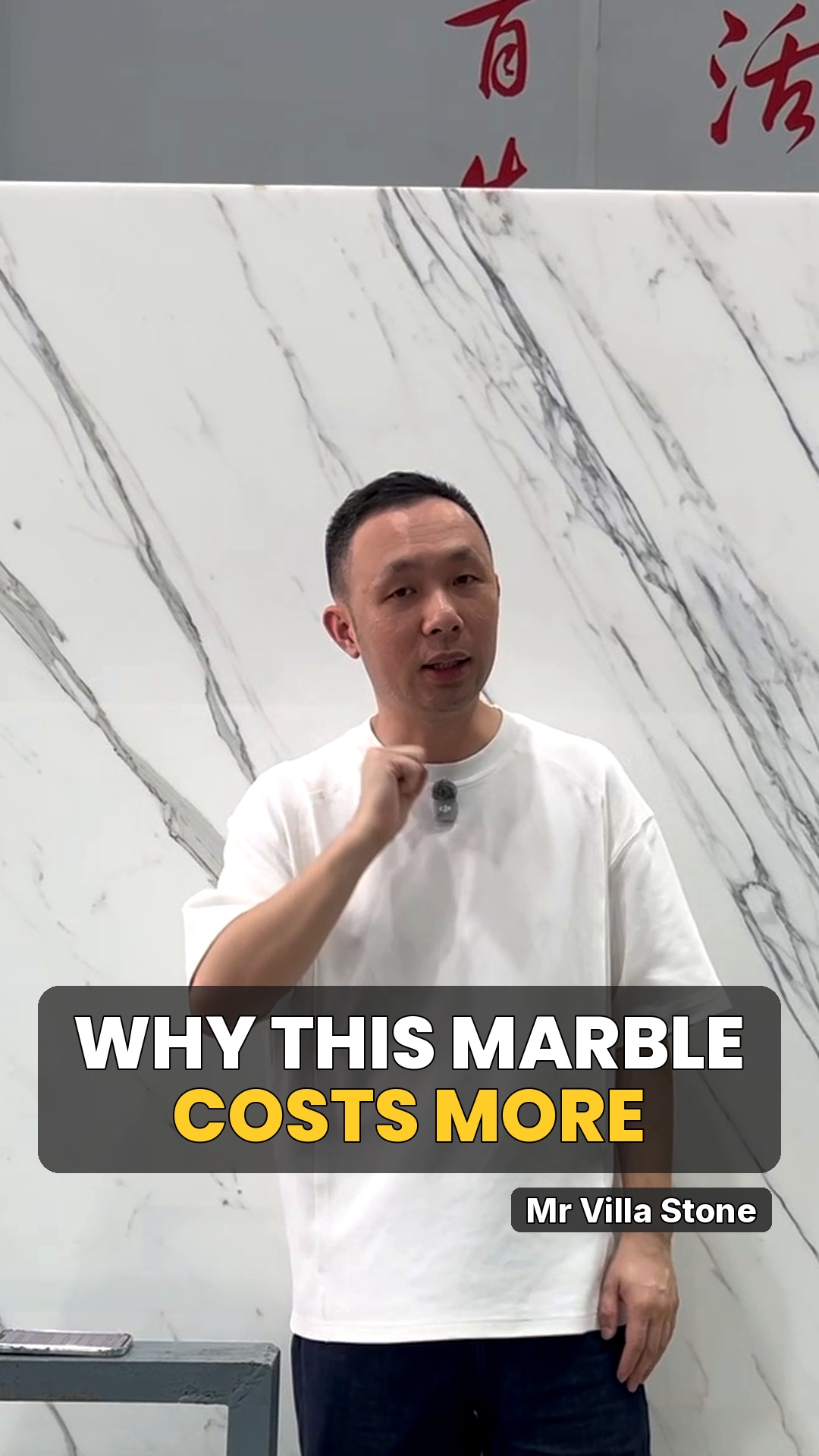
Why does Calacatta-style white cost more?
Why is it worth that? Let's break it down.
In white stone, this is right at the top.
Why does the market accept that?
Because its visual quality and finished effect
have already been recognized
in high-end interiors.
So it isn't simply expensive.
There's a whole set of things
supporting its value.
So which part of the market
is willing to choose it?
Look at high-end projects.
You'll see this marble used frequently.
Five-star hotels, premium commercial centers,
high-end homes—these projects demand
a high standard of appearance and quality.
Its continued use there shows
it isn't just a passing trend.
It's been recognized and tested
through years of high-end use.
Over time, a shared understanding develops.
When people see this marble,
they recognize both the material's grade
and the project's positioning.
Once a material gains that kind
of industry recognition,
its value goes beyond the stone itself.
There's something interesting about this marble.
It's a bit like Bentley or Rolls-Royce.
People who know it recognize its value
as soon as they see it.
In the stone trade,
its name alone signals high-end white stone.
Choosing this marble
isn't just choosing a material.
It's choosing recognized standing,
an aesthetic level,
and an expression of identity.
That isn't about showing off.
When you have the choice,
naturally you choose something better.
But here's the question.
Why did this particular marble
earn that recognition?
Look at the resources behind it.
Its lasting value is tied to quarry resources.
These Italian quarries are privately owned
and can be passed down through generations.
By contrast, here in China,
quarries aren't private property.
Companies hold mining rights
for five or ten years.
When that period ends, the mining right ends.
That encourages intensive extraction.
The Italian quarries behind this marble
operate it as a brand.
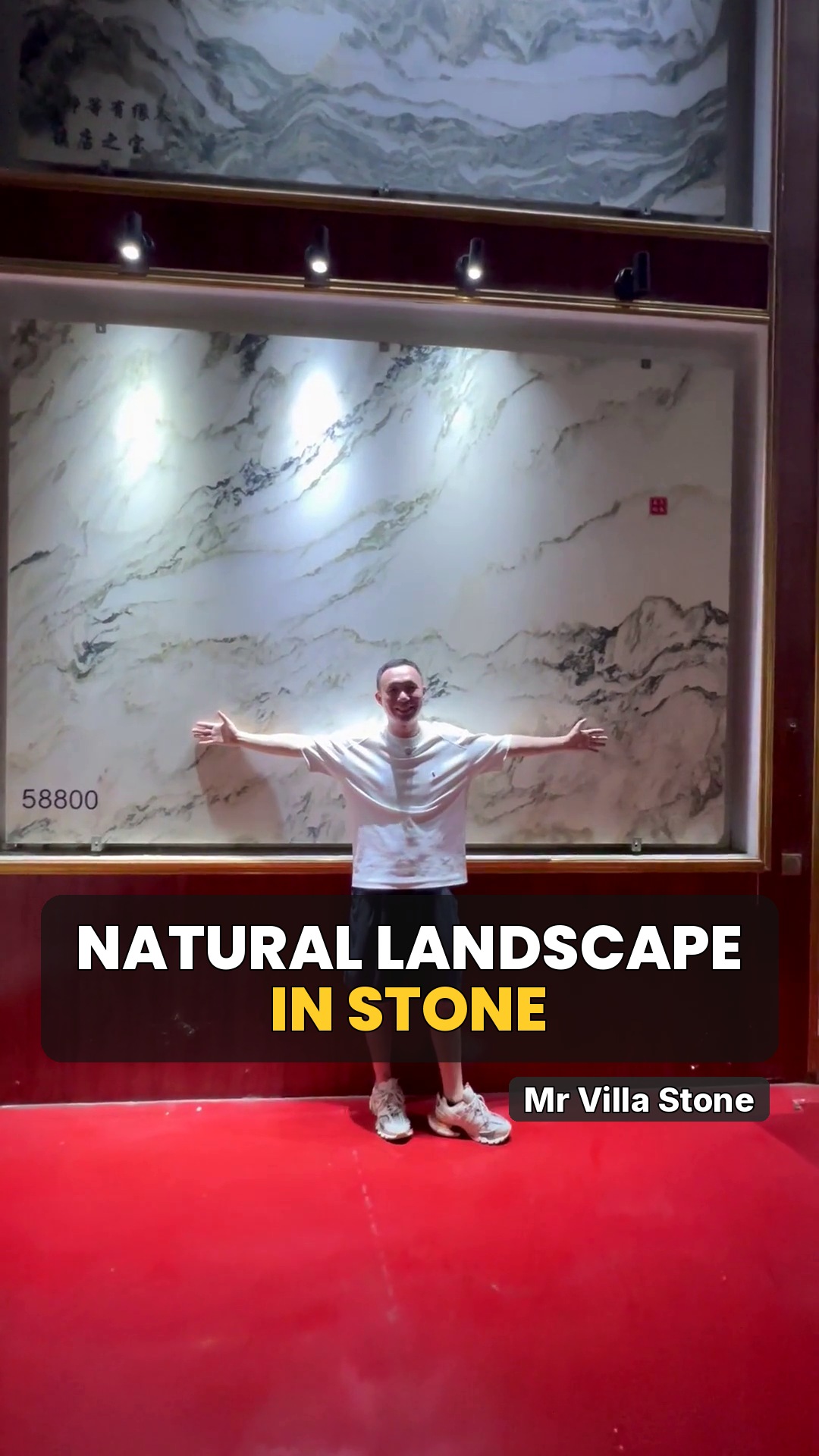
There's also the veining.
Every slab is different, shaped by nature.
A slab's pattern could be displayed
as a painting in its own right.
Its value comes partly
from the unique quarry resource,
and partly from its one-of-a-kind patterns
and artistry.
Natural uniqueness helps explain its rarity.
But to call it the king of white stone,
we still need to look at the stone itself.
There are many white stones.
Achieving a high level of veining, sheen,
and overall impact across a whole space
isn't easy.
A good slab starts
with a very clean white background,
then adds unique veins and layers of detail.
In a room, it doesn't merely fill
the walls and floors.
It changes the character of the whole space.
Add scarce resources, natural uniqueness,
years of use in top-end projects,
and established industry recognition.
All those layers put it
at the very top of white stone.
That's why I don't see 'king of white stone'
as just a name for this marble.
To me, it reflects all those different kinds of value
building on one another, layer by layer.